

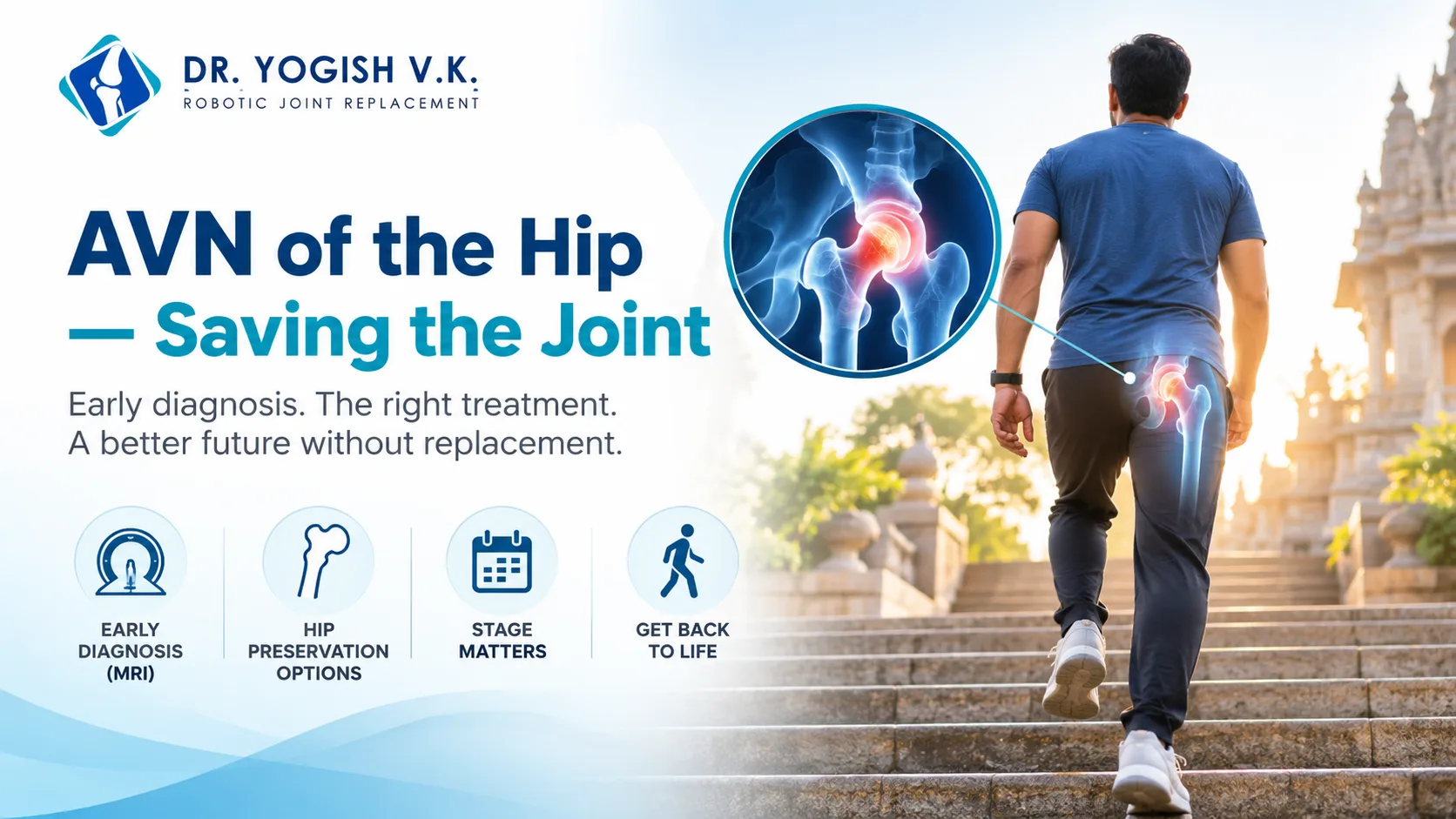
Avascular necrosis of the hip is a race against time. The blood supply to the femoral head fails, the bone begins to die, and at some point the head collapses. Before that collapse, there are procedures that can preserve your own hip. After it, a replacement is usually the only option. Most patients arrive after the window has closed, not because treatment failed, but because the early pain was mistaken for a muscle strain.
Why more people are being diagnosed
Orthopaedic surgeons across India have seen a marked rise in avascular necrosis since the COVID-19 pandemic, and the link is well recognised in the Indian literature: high-dose steroid treatment is one of the strongest known risk factors for AVN. Many patients treated with steroids during severe illness are presenting now, two to four years later.
The other common causes are long-term steroid use for conditions such as asthma, lupus or rheumatoid arthritis, significant alcohol intake, sickle cell disease, and previous hip injury. In a meaningful number of cases, no cause is ever identified.
What makes AVN different from ordinary arthritis is who it affects. It strikes men most often between 25 and 44: people at the height of their working lives, who will outlive several hip replacements if the joint is replaced too early. That is precisely why saving the hip matters here more than almost anywhere else in orthopaedics.
The stage decides everything
AVN is graded by how far the damage has progressed. Your stage, not your symptoms, determines what can be offered.
| Stage | What has happened | What can be done |
|---|---|---|
| Stage 1 | Bone is dying but X-rays still look normal. Only MRI shows it. | Hip can usually be preserved |
| Stage 2 | Changes now visible on X-ray. The femoral head is still round. | Hip can often be preserved |
| Stage 3 | The femoral head has begun to flatten or collapse. | Preservation becomes difficult |
| Stage 4 | The head has collapsed and the joint surface is damaged. | Replacement is usually the answer |
What early hip pain feels like
AVN pain is typically felt in the groin rather than the outer hip. It is worse on weight-bearing, often aches at night, and may radiate to the thigh or knee, which is why it is so often mistaken for a muscle problem. Some patients notice stiffness putting on socks or getting out of a car. Early on, the pain comes and goes, which is exactly why people wait.
Treatment when the hip can still be saved
Core decompression
Small channels are drilled into the femoral head to relieve pressure inside the bone and encourage new blood vessels to grow in. It is a short procedure through a small incision, and recovery involves a period on crutches. It is frequently combined with bone marrow concentrate taken from your own pelvis, which supplies cells intended to help the bone repair.
Bone grafting and structural support
In some stage 2 and early stage 3 hips, grafting is added to support the bone while it heals.
What non-surgical care can and cannot do
Protected weight-bearing, medication and physiotherapy help with symptoms and are part of the plan. On their own, however, they do not reliably stop AVN progressing. Anyone offering a purely non-surgical cure for established AVN is overpromising.
An honest word on outcomes
Hip preservation does not always succeed. Published series report a meaningful proportion of hips that still go on to need replacement despite core decompression, and the earlier the stage, the better the odds. That is not a reason to avoid trying: a hip preserved for ten or fifteen years in a thirty-five-year-old is a substantial gain. It is a reason to be told the truth before you decide, and to act while the odds are still in your favour.
When replacement is the right answer
Once the femoral head has collapsed, preservation surgery no longer helps, and continuing to wait only damages the socket as well. Modern hip replacement in a younger patient is a very different proposition from a generation ago. Robotic planning and the direct anterior, muscle-sparing approach allow accurate implant positioning and a quicker return to normal movement.
What to do if you suspect AVN
- Ask for an MRI if you have hip or groin pain and any risk factor, especially past steroid treatment.
- Do not wait for the pain to become constant. Intermittent pain is early pain, and early is good.
- Get both hips imaged. AVN affects both sides in a large share of patients, often silently.
- Ask your surgeon directly which stage you are at, and what that stage allows.
Book a consultation with Dr. Yogish to have your MRI reviewed and your stage explained.