
Robotic Surgery Technology for Joint Replacement in Bangalore
Robot-assisted surgery doesn't replace the surgeon, it gives the surgeon's plan a level of precision the human hand alone cannot reach. Here's what actually happens, and why it matters for your recovery.
Four capabilities, one precise result
From planning to placement, every stage is designed to reduce guesswork and shape the surgery around you.
3D Planning
Your joint is reconstructed in three dimensions from your scans. Implant size, position and alignment are planned to your exact anatomy before surgery begins.
Robotic Guidance
During surgery, the robotic arm keeps the operation within the planned boundaries, giving the surgeon live feedback so nothing drifts from the plan.
Precision Alignment
Soft tissue and ligament balance are measured and fine-tuned to your joint, helping the replacement feel natural through its full range of motion.
Implant Positioning
Components are placed to sub-millimetre accuracy. Correct positioning is a key factor in stability, comfort and long-term implant durability.
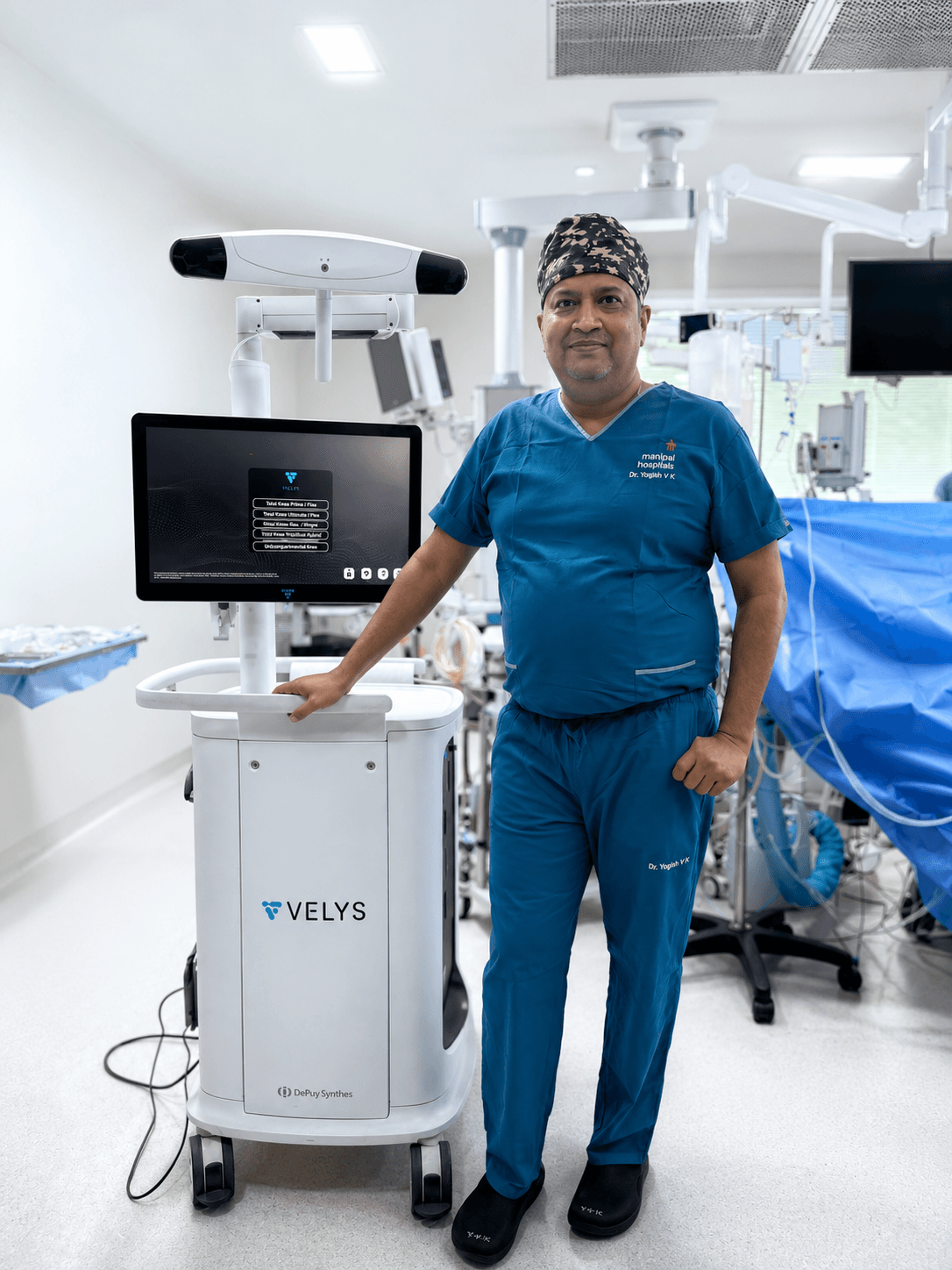
The technology supports the surgeon. The surgeon delivers the outcome.
Robotic surgery is about better precision, better planning and better recovery, never about replacing the doctor. Every decision remains with Dr. Yogish; the robot simply makes sure the plan is carried out exactly as intended.
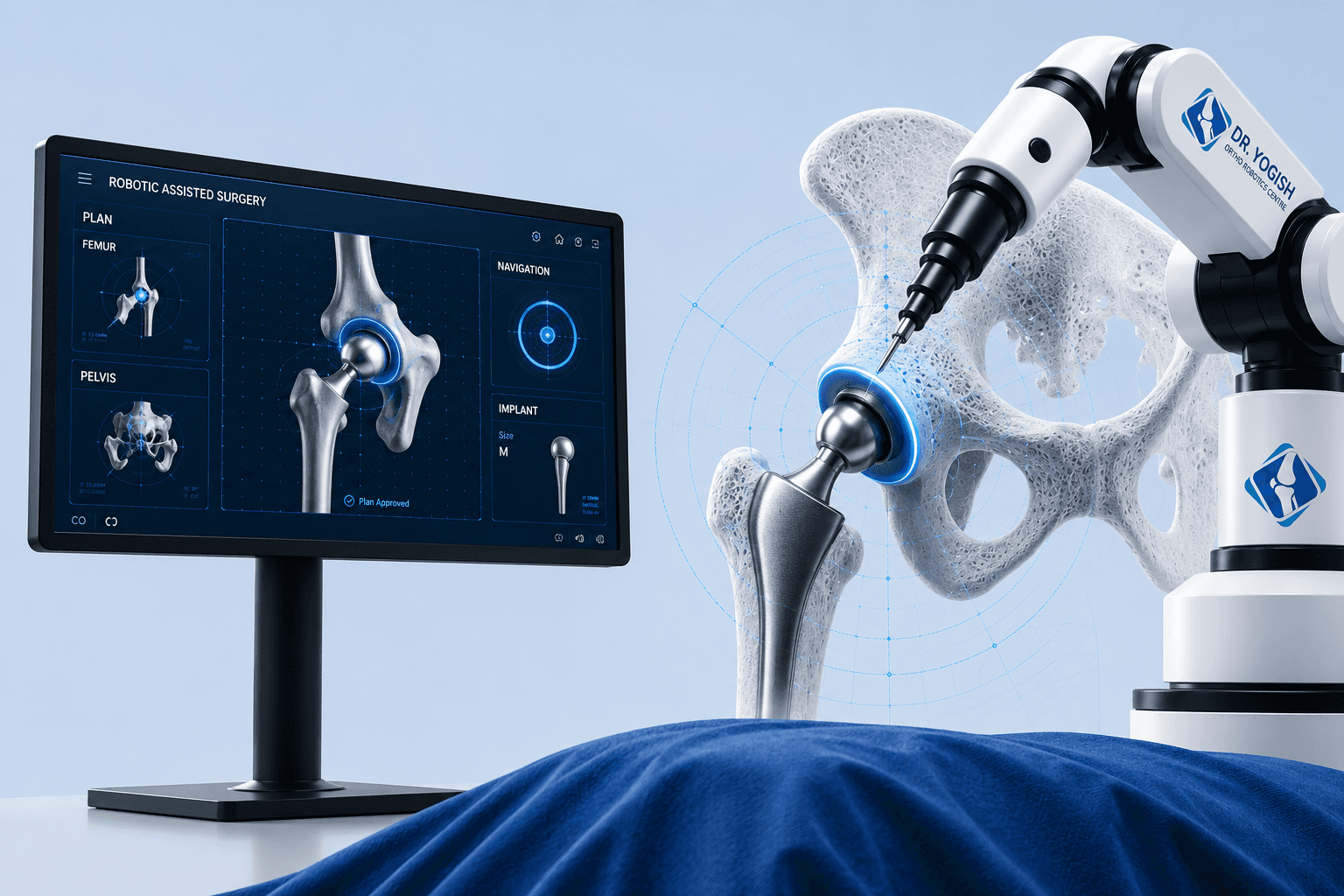
The plan
Your operation, rehearsed before it happens
Before the first incision, your joint exists as a three-dimensional model. Implant size, cup angle, leg length and alignment are all decided on that model, reviewed and approved, so the operation begins with the answer already worked out.
- Planned in 3D
- From your own scans
- ± 0.5 mm
- Implant positioning
- Live feedback
- On every cut
- Surgeon-led
- Every decision
The team around the technology
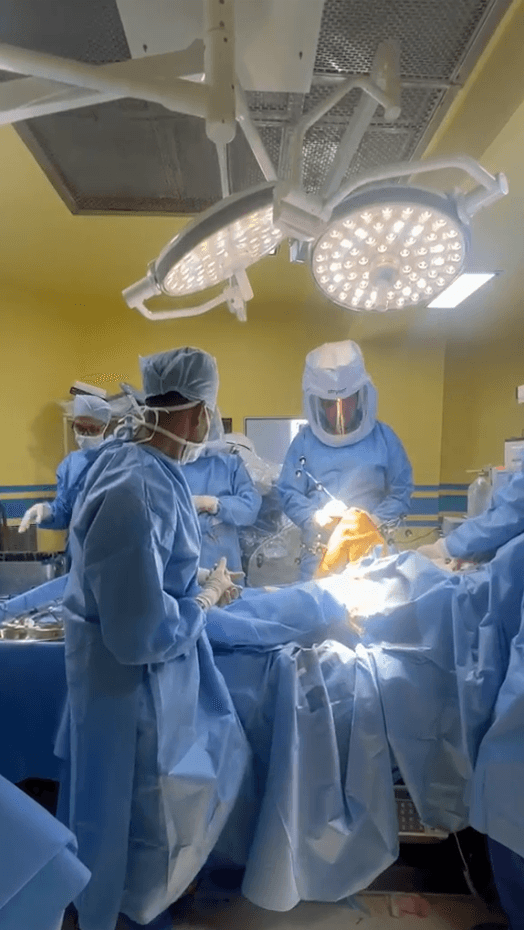
A robot in the room changes very little about what keeps an operation safe. The same theatre discipline applies: hooded exhaust suits, a scrubbed team that works together case after case, and a plan everyone has seen before the first incision.
1.png&w=3840&q=75)
Why it looks like this
The hoods are body exhaust suits: they keep the surgical field clear of anything the team carries, which matters most in joint replacement, where an implant is going in to stay. The screens behind carry the 3D plan and the live position of every instrument, so the whole team is reading the same operation at the same time.
What changes with robotic assistance

Book a consultation
Is robotic surgery right for you?
The only way to know is a proper assessment. Book a consultation and Dr. Yogish will review your scans and explain your options clearly.